
Relocation success in Finland starts with everyday life

The global recruitment process does not end when permits are sorted and the employee arrives in Finland. True success reveals itself only when everyday life in the new country begins. Relocation determines whether the talent and their family stay. The employer’s role at this stage carries more weight than many realize.
Many companies consider global recruitment successful once the talent arrives in Finland. The employer has found the right person, permits are in order, and life in a new homeland begins. At this point, many companies see this as the finish line. In reality, they have only reached the starting line.
The permit process ends when the permit is granted, but integration into Finland continues much longer. Adapting to a new workplace already takes time. On top of that, employees arriving from abroad must adapt to an entirely new country.
People often assume that highly educated professionals can independently manage their everyday arrangements. Work tasks may be under control, but building everyday foundations in a new country presents a completely different challenge. Even small things demand time and energy. If family members relocate as well, adaptation becomes even more demanding. Meanwhile, the employee should start their new job, learn new ways of working, and build trust.
If the early phase brings several difficult experiences in succession, the family may quickly decide to return home. For companies, this means a short employment relationship that never delivers value. Investment in recruitment and onboarding goes to waste.
Realistic expectations support decisions
The employer plays a significant role before the employee even arrives in Finland. When job candidates receive a realistic picture of everyday life, their decision to relocate rests on understanding. Information about school options, how winter changes daily routines, and what spouse employment requires builds security in ways that surpass any single measure.
Onboarding international employees extends beyond work tasks. Relocation touches schools, healthcare services, language courses, friendships, and the everyday life that forms gradually. When companies address these in onboarding, moving to a new country becomes more manageable.
Open, realistic conversations before the move prevent disappointments later.
One practical solution involves mentoring, where a new employee receives support for everyday questions. This simple model eases life when many concerns arise that people hesitate to bring to their supervisor. Some companies deliberately recruit several talents to the same location simultaneously so they can support each other. This approach works particularly well in areas lacking established international communities.
Some companies have taken this thinking even further. Supercell, for example, has a spouse community with over 240 members that supports newcomers. The community organizes workshops where people solve everyday challenges together, such as how to dress children for Finnish winter or how to access Finnish healthcare. The community ensures new families receive support and can ask questions. This requires no continuous company resources yet creates an environment where families support each other.
Different talents follow different paths
Global talents do not form a uniform group. Some move to Finland seeking new career experiences, short projects, or CV enhancement. These adventurers treat moving abroad as a temporary stage, and roots outside work do not rank among their primary goals.
Others view moving to Finland as a longer-term decision. Settlers often relocate with family and carefully evaluate what kind of place Finland offers for living, working, and raising children. For them, functioning everyday structures, safety, and finding community prove decisive.
Relocation means different things to these two groups. Adventurers need support that enables a quick start and helps them connect with their work community, since work typically sits at the center of their relocation decision. For settlers, family support and smoothly functioning everyday life matter most, since precisely these factors determine long-term commitment. When employers understand which type of talent is relocating to Finland, they can more easily provide the right support.
Location affects integration
The shortage of skilled, motivated employees currently hits smaller, more remote locations hardest. In these areas, everyday services also remain more limited than in larger cities. This shapes how relocation unfolds. Fewer services exist, leisure options remain limited, and distances can stretch long. A car becomes practically essential in many locations. Language courses, hobbies, and international communities may also prove scarce.
In remote areas, everyday life takes shape differently than in cities.
None of these factors prevent global recruitment or successful relocation, but they shape integration conditions. Remote areas may feel more challenging if the environment offers insufficient activities outside work. For others, services offered to families, schools, and communities tip the scales.
For recruitments to more remote areas, we have found that recruiting two talents to the same location simultaneously works well. This creates peer support from the start and reduces the risk that a single setback cuts short relocation in the new homeland.
Global recruitment evolves
Finland has made significant improvements to global recruitment processes in recent years. The fast track for specialists has considerably accelerated residence permit processing. Employer certification has eased the workload for companies that recruit continuously. Taxation of relocation support has also lightened, encouraging companies to support employees in their relocation.
These changes move in the right direction and ease company efforts. The next step requires ensuring that relocation succeeds as well as the permit process. When both work, global recruitment becomes truly sustainable.
Smooth everyday life makes recruitment lasting
Relocation largely involves building everyday life. It means understanding school pathways, visiting the health center, finding hobbies, and discovering how the family finds its place in the environment. These matters often determine whether relocation succeeds. When everyday life falls into place, employees can focus on their work and build relationships with their work community.
The permit process sets the start. Everyday life shapes the future.
From a company perspective, supporting relocation represents a strategic investment. It reduces short employment relationships and strengthens employer brand. Experiences shared in international networks and discussion groups significantly affect company reputation. Positive experiences spread quickly, but so do negative ones.
When companies understand this and support relocation at the right points, global recruitment becomes a sustainable and profitable part of operations. This also builds the foundation for Finland to appear worldwide as a country where global talents and their families can build lives for the long term.
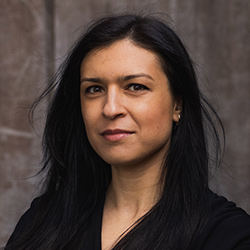
The author of this article, Marina Velikova works as the Head of Solutions for Global Talent Solutions at Barona and Finland Relocation Services.